When injury strikes, you need a clear and structured progression back to performance.
Pain is rarely just about damaged tissue — it’s often a mismatch between load and capacity. For active individuals and athletes, that mismatch creates uncertainty. Should you rest? Modify? Push through? Without a clear plan, training becomes inconsistent, confidence drops, and progress stalls.
At Bend Without Breaking Athletic Therapy, rehabilitation is built around restoring capacity. I assess not just your symptoms, but the physical demands of your sport or activity — from running mileage to throwing volume to gym training intensity — and design a progressive plan that rebuilds your ability to tolerate and produce load.
Virtual athletic therapy allows for focused, individualized care without compromising quality. You receive structured programming, ongoing adjustments, and clear performance markers so you always know where you stand and what comes next.
Education is central to the process. Understanding how load, recovery, and adaptation interact empowers you to take control of your rehab. Through progressive, evidence-based exercise, your body adapts — becoming stronger, more resilient, and better prepared for future demands.
Rehabilitation is not about avoiding stress. It’s about applying the right stress at the right time so you can return to sport with confidence and long-term durability.

Supporting Athletes, Movers and Everyday People
I work with active individuals who view rehabilitation as part of training, not a pause from it.
Performance-Focused Athletes
Athletes training for competition — from local leagues to high-performance environments — who need structured rehab that respects the physical demands of their sport and restores performance capacity, not just reduces pain.
Recreational & Fitness-Driven Individuals
Active adults who train consistently — in the gym, on the field, on the road, or in group classes — and want a clear plan to overcome injury without losing momentum.
Throwing & Overhead Athletes
Baseball, softball, and other overhead athletes managing shoulder or elbow pain related to throwing volume and workload. Rehabilitation focuses on restoring strength, improving load tolerance, and building long-term durability.
Individuals Managing Persistent or Recurrent Injuries
Those dealing with ongoing tendon pain, recurring strains, or long-standing issues who want to rebuild durability, improve load tolerance, and regain confidence in their body.
About Me
My clinical approach has been shaped by working in high-performance baseball environments and refined through years of continued study in modern rehabilitation science.
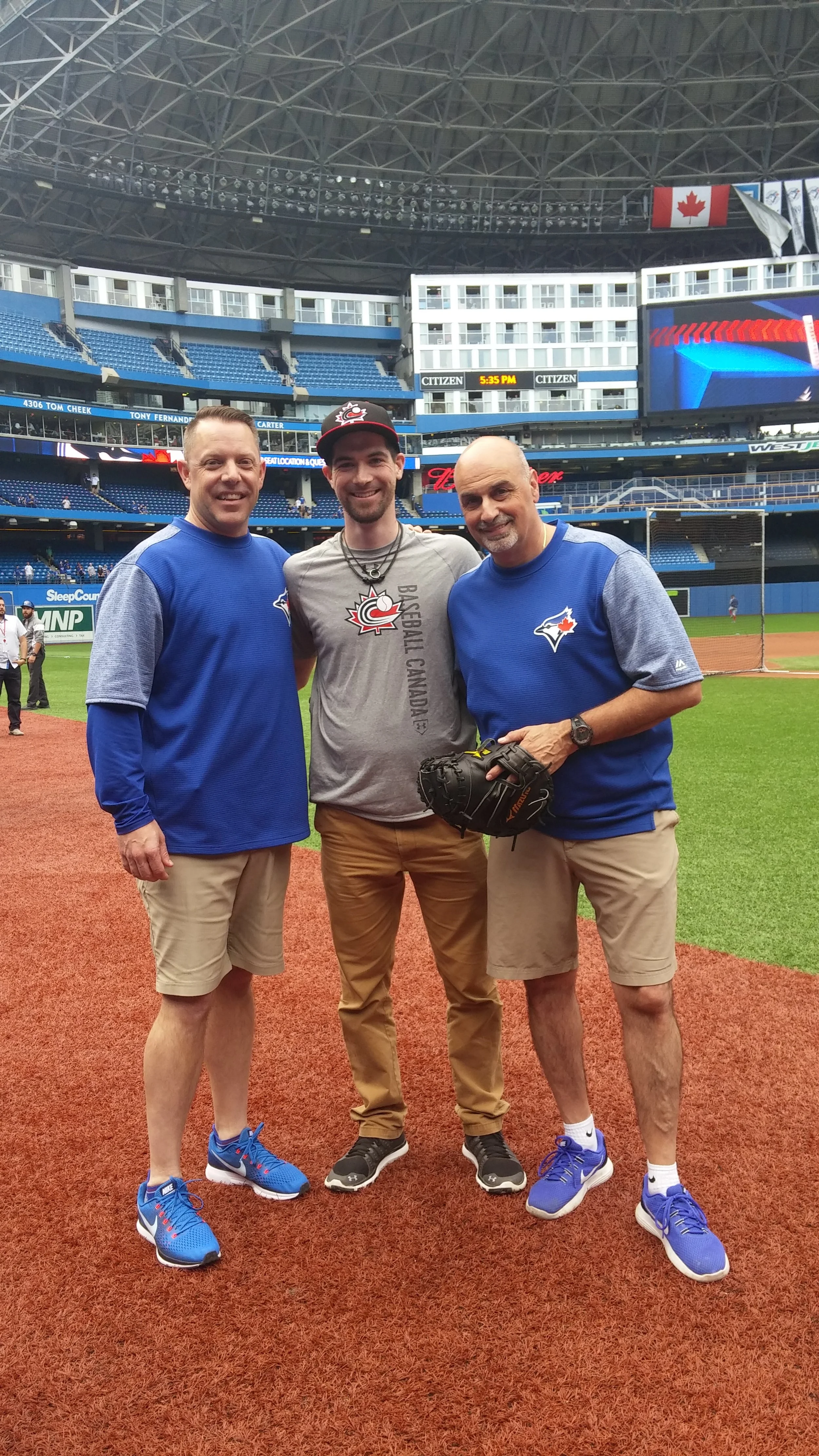
During my schooling, I had the opportunity to intern with the Toronto Blue Jays organization. While professional sports represent the highest level of athletics, the reality is more nuanced — elite sport is often about availability and readiness as much as healing. In a 162-game season, decisions are made daily around workload, recovery, and performance availability. That experience gave me a deep appreciation for load management, symptom monitoring, and the realities of high-volume sport — particularly the repetitive, high-intensity demands placed on the shoulder and elbow in throwing athletes. Sometimes the goal is preparing someone for the next game, not eliminating every ache and pain.
I continued working in elite baseball with Baseball Canada’s Junior National Team, including the WBSC U18 Baseball World Cup, as well as assisting with training camps and filling in for Softball Canada’s Women’s National Team. In these environments, I was responsible not just for treating injuries but also for managing 20–30 athletes through demanding schedules of practice and competition. Those roles sharpened my ability to balance short-term performance needs with long-term development under real competitive pressure. At times, it meant helping an athlete prepare for the next game; at other times, it meant holding them back to protect future sessions.
While these experiences strengthened my understanding of performance sport, my broader clinical philosophy was shaped by continued education with educators such as Greg Lehman, Jared Powell, and Adam Meakins. Their work reinforced principles that now guide my practice:
Calm symptoms when necessary.
Progressively rebuild load tolerance and expand performance capacity.
Prioritize movement preparation over movement quality.
Communicate honestly about uncertainty.
Focus on resilience, not just structure.
Rehabilitation is rarely about correcting a single flaw. Pain is influenced by load, stress, recovery, context, and individual variability. Rather than relying on rigid formulas or fear-based explanations, I take a measured, evidence-informed approach that respects both the science and the individual in front of me.
Today, I specialize in shoulder and elbow rehabilitation, particularly for throwing and overhead athletes, while also working with runners and gym-goers managing persistent or recurrent injuries. Whether the goal is returning to competition or training consistently without second-guessing every movement, the objective is the same: build durable tolerance.
Now based in Ireland, I deliver this model through virtual athletic therapy. Virtual care allows for structured programming, progressive loading, and clear communication while maintaining high clinical and performance standards.
Whether you are preparing for competition or simply trying to train consistently without setbacks, the goal is the same: apply the right load at the right time in a way your body can tolerate and adapt to.
Bend Without Breaking reflects the philosophy behind my work — the body adapts when challenged appropriately. With thoughtful progression and clear direction, it can recover, adapt, and grow stronger while continuing to handle meaningful stress.
Bachelor of Arts in Kinesiology and Physical Education
Bachelor of Applied Health Sciences in Athletic Therapy
Diploma in Massage Therapy (Advanced Standing program)
Certified Athletic Therapist with the Canadian Athletic Therapy Association
Certified Athletic Therapist with Athletic Rehabilitation Therapy Ireland
Member of the Ontario Sports and Athletic Therapist Association