Pain Does Not Always Mean Damage, and Why That Matters for Injury and Recovery
Whenever we feel pain, we usually assume we have caused some sort of tissue damage. But this isn’t always the case. Pain is not a direct measure of injury, and it’s often a poor indicator of how much damage is actually present. A more useful way to understand pain is to think of it as a reflection of tissue sensitivity rather than damage. This shift in perspective can have a major impact on how you approach recovery and whether you stay stuck or start making progress.
What is Pain, Really?
Pain can be hard to define, but at its core, pain is an unpleasant sensory and emotional experience associated with actual or potential tissue damage. This definition is important because it highlights that pain is real, but it’s also influenced by more than just what’s happening in our tissues.
Pain Does Not Always Reflect Tissue Damage
Paper cuts are a great example of how a very minor cut to the skin can be quite painful at the moment. On the other hand, the occurrence and progression of rotator cuff muscle tears increase with age, yet around 50% of people are asymptomatic. These two examples highlight just how varied our experience of pain can be. If pain always meant damage, then paper cuts wouldn’t hurt as much as they do, all shoulders would become progressively more painful as we age, and serious injuries would always be extremely painful. This is exactly why pain isn’t a reliable measure of damage.
We have this varied experience because pain is influenced by many factors. While we have sensory receptors that pick up painful sensations, pain itself is the brain’s interpretation and output of this information. Factors like stress, sleep, previous pain experiences, and even how you think about your injury can all turn the volume of pain up or down. When pain changes day to day, it doesn’t mean tissues are repeatedly being damaged and healed - it often reflects changes in sensitivity.
Pain is Influenced by More Than Just Tissue Damage
This matters because how we interpret pain influences how we respond to it. Many people become fearful of moving a painful area because they assume they’re causing more damage. While understandable, this avoidance can lead to under-loading and delayed recovery. On the other end, completely ignoring pain can lead to overload and further injury. Viewing pain as sensitivity, not just damage, allows you to move and load an area with more confidence while still respecting your limits.
When Pain is Helpful, and When It Isn’t
While unpleasant, pain can be helpful in certain circumstances. Following an acute injury, like rolling your ankle, it is the sensation of pain that tells us to stop the activity to avoid further injury and let it heal. We can use pain as a guide to know if activity is too much for us right now. However, pain can persist beyond normal healing timelines. The longer pain sticks around, the more sensitive the system can become, and the less reliable pain can be.
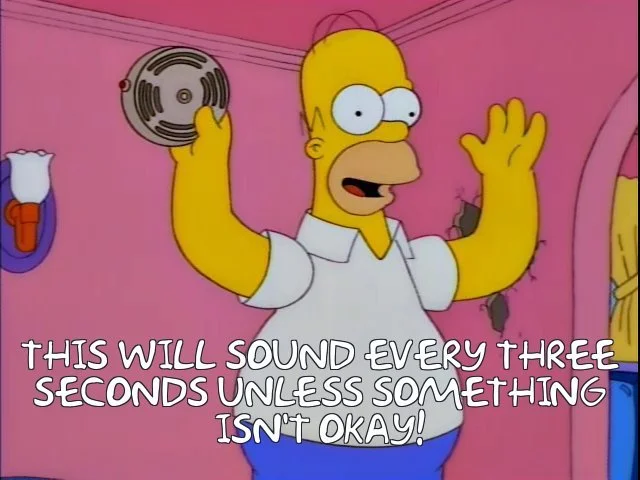
I liken this to a smoke detector that starts beeping when you’ve just burnt a piece of toast. There’s no fire or even visible smoke, but that smoke alarm is highly sensitive, and it lets you know something is going on. Our brains can work the same way - pain can show up even when there’s no ongoing damage, acting like an overprotective alarm rather than a warning sign of harm.
Why This Matters for Injury and Rehab
Instead of asking “is this damage?”, a better question is: “what can I handle right now?” In some cases, it is okay to be active and exercise even if we have pain. Other times, it’s appropriate to take a step back and allow things to settle. When we view pain as more about sensitivity than damage, it becomes easier to keep moving and loading an area without unnecessary fear.
We can then scale activity to match that level of sensitivity - working within a tolerable range, adjusting when needed, and using pain as a guide rather than a stop sign. If pain is acting like that sensitive smoke detector, the goal isn’t to shut it off completely, but to gradually build tolerance so it becomes less reactive. From there, the focus shifts to what actually drives recovery: strength, mobility, movement quality, and confidence.
Pain is real, but it’s not always reliable. The fact that pain can vary from person to person with similar injuries, and that pain can be influenced by many things should tell us that not all pain is damage. Rather, it might be more useful to view pain as more about sensitivity, as this allows us to move and use an injured area while still respecting what we are experiencing. Pain is part of the picture, but it’s not the whole picture, and it’s not always a reliable measure of damage.
