Pain is Part of the Picture, But Not the Whole Picture
Pain is real, but pain is weird. This past week in my baseball game, I had to dive back to first base for three pick-off attempts, and then I stole second base, and I came out of it with a scrape on my right knee. The rest of the day and into the next, it was throbbing and painful, with a tearing sensation while bending my knee. But it got me thinking, “this is just a scrape to the outer layer of my skin, why does this hurt so much?” That is because pain tells us something has happened, but it doesn't necessarily tell us what has happened.
Pain is real, but pain is weird. This past week in my baseball game, I had to dive back to first base for three pick-off attempts, and then I stole second base, and I came out of it with a scrape on my right knee. The rest of the day and into the next, it was throbbing and painful, with a tearing sensation while bending my knee. But it got me thinking, “this is just a scrape to the outer layer of my skin, why does this hurt so much?” That is because pain tells us something has happened, but it doesn't necessarily tell us what has happened.
Pain is very abstract, and it can be difficult to describe and quantify, yet it is usually the central theme during injury assessment and rehab. The textbook definition of pain is an unpleasant sensory and emotional experience linked to actual or potential damage; the keyword being ‘linked’ and not ‘the result of’. It’s why a paper cut can be quite painful. But it’s also why diagnostic imaging can reveal rotator cuff tears or knee osteoarthritis in people without pain or other symptoms. Two people can have similar degrees of degeneration (or as I prefer, age-related changes), yet one has very minimal symptoms and one has debilitating symptoms. Pain reflects your experience, but not necessarily how much harm has occurred. A 1/10 pain doesn’t mean a 10% tear and an 8/10 doesn’t mean an 80% tear.
So why is pain so variable among people? Pain is influenced by numerous factors. One of those factors is, of course, what is happening at the tissue level. But also think about your previous experiences with pain, your current level of stress, your sleep quality, your level of concern about the injury, your expectations about your pain, and what you think your pain means, just to name a few. All of these factors can change your experience of pain, either turning up or down the volume knob on your injury.
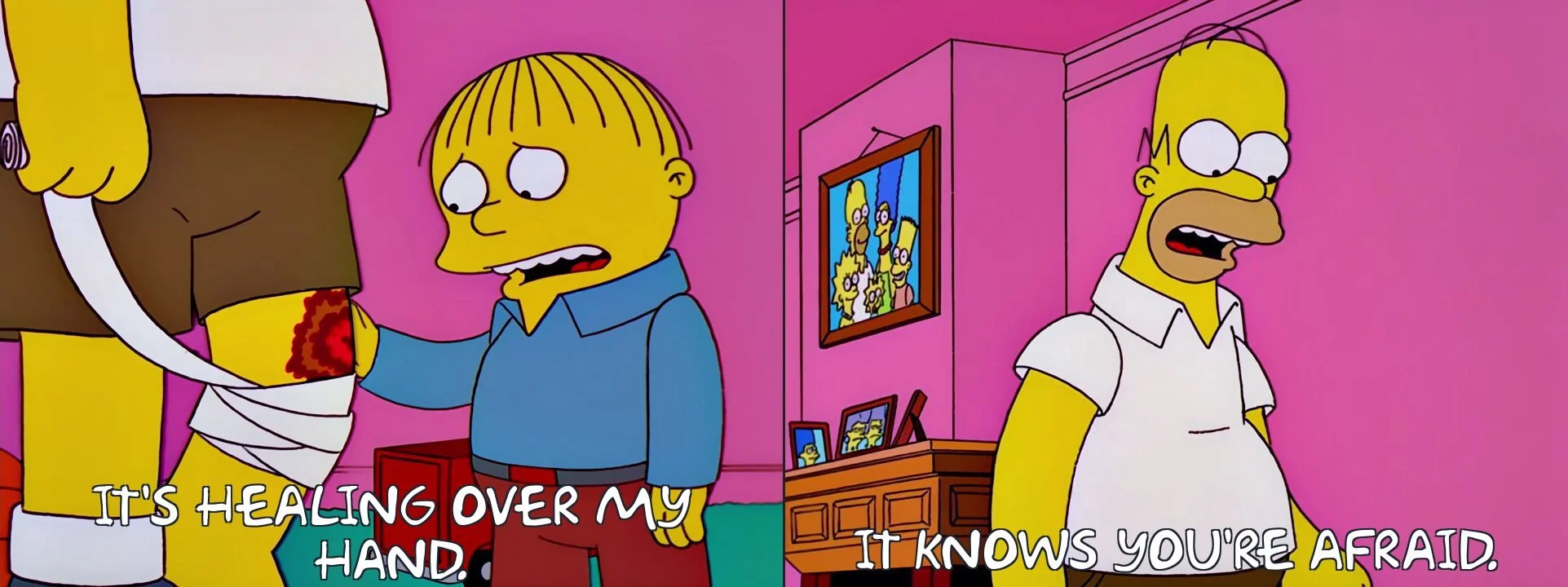
Pain is useful because it usually forces us to change something. If there’s a stone in our shoe, we stop and take it out. If I scraped my knee, I’m probably not going to kneel down on it. Pain after an acute injury can help us protect the area while it heals, but that doesn’t mean we have to stop everything we’re doing. Though the individual nature of the injury and pain matters, we can still generally do some activity as long as the pain is tolerable. At the same time, no pain doesn’t mean everything is fully healed and you’re ready to go. My knee could be pain-free, but the scab is still forming and therefore highly susceptible to re-injury.
When it comes to assessing an injury and developing a rehab plan, there is more to it than just, “how much does it hurt?” I ask a lot of questions that paint a more complete picture of your injury beyond just pain. Was this a traumatic injury or something that slowly developed? What can you currently do? What is your pain preventing you from doing? What impact is your pain having on you day-to-day? What impact is it having on your physical activity? Is your pain getting worse or changing at all? Does your pain make sense to you? Can you control your pain? How confident are you that this will improve? These questions give me WAY more information than simply describing your pain. They tell me about the impact it is having on you, as well as your views and outlook on your pain. This paints more of a complete picture than a 5/10 dull aching pain.
My scraped knee reminds me that pain is weird, but it doesn’t accurately reflect what’s going on. This scraped knee made running feel really weird, but I’ve previously been able to play baseball with a full-thickness rotator cuff tear. It may help to think of pain, not as an indicator of what we’ve done to ourselves, but as a volume knob that gets turned up and down to reflect our experience.
Pain Relief is Not the Finish Line
When pain starts to settle, it’s normal to think that you’re ready to get back to physical activity and sports. Reducing pain is one of the first goals we focus on in early rehab given the unpleasantness of pain - it’s uncomfortable, limits movement, and can negatively affect how we view our injury. That’s why, when pain does start to improve, it feels like a big win. We can start to move more comfortably again, and we’re able to return to various activities. We can feel like we’re ready to jump back into sports, but this is usually a false sense of security. For many injuries, pain relief is the beginning of the next rehab phase, not the end of rehab.
When pain starts to settle, it’s normal to think that you’re ready to get back to physical activity and sports. Reducing pain is one of the first goals we focus on in early rehab given the unpleasantness of pain - it’s uncomfortable, limits movement, and can negatively affect how we view our injury. That’s why, when pain does start to improve, it feels like a big win. We can start to move more comfortably again, and we’re able to return to various activities. We can feel like we’re ready to jump back into sports, but this is usually a false sense of security. For many injuries, pain relief is the beginning of the next rehab phase, not the end of rehab.
Why Less Pain Doesn’t Always Mean You’re Ready
Unfortunately, pain doesn’t tell us the whole story. Pain reflects sensitivity, not just tissue damage, and can be influenced by many factors beyond the injury itself. A runner may have less knee pain but still lack the mileage needed to return to full training. A baseball pitcher may throw pain-free but still not have the velocity or volume needed for competition. In both cases, pain has improved, but there is still a gap between feeling better and being prepared.
The Gap Between Feeling Better and Performing Better
Pain relief and performance are not the same thing. While reducing pain is often the first goal, it’s not the only goal. A good rehab program should be built around increasing your ability to handle the demands of your sport or physical activity. This includes strength, mobility, endurance, conditioning, skill, and confidence. Many people will either rest their aches and pain until they feel better, or do some rehab until the pain goes away, and then jump straight back into their activity. But focusing on just pain can often lead to flare-ups, setbacks, and regressions in rehab because they mistake feeling better for being prepared to return to sport. Unfortunately, getting out of pain isn’t the same as getting back to sport.
What Rehab Should Focus on After Pain Settles
The goal after pain settles is to close the gap between where you are and what your sport requires. For a runner, that may mean gradually increasing mileage. For a pitcher, it may mean rebuilding throwing volume and intensity. For others, it could mean restoring strength, power, conditioning, or confidence. Whatever the activity, the principle is the same: progressively expose yourself to the demands you’ll eventually face.
Pain Relief is the Beginning, Not the End
A decrease in pain is worth celebrating, especially if the injury has been limiting for a long time. But pain relief itself isn’t the finish line. It’s often the point where the focus shifts from feeling better to becoming prepared. Because getting out of pain and getting back to sport are not always the same thing.
Pain Does Not Always Mean Damage, and Why That Matters for Injury and Recovery
Whenever we feel pain, we usually assume we have caused some sort of tissue damage. But this isn’t always the case. Pain is not a direct measure of injury, and it’s often a poor indicator of how much damage is actually present. A more useful way to understand pain is to think of it as a reflection of tissue sensitivity rather than damage. This shift in perspective can have a major impact on how you approach recovery and whether you stay stuck or start making progress.
Whenever we feel pain, we usually assume we have caused some sort of tissue damage. But this isn’t always the case. Pain is not a direct measure of injury, and it’s often a poor indicator of how much damage is actually present. A more useful way to understand pain is to think of it as a reflection of tissue sensitivity rather than damage. This shift in perspective can have a major impact on how you approach recovery and whether you stay stuck or start making progress.
What is Pain, Really?
Pain can be hard to define, but at its core, pain is an unpleasant sensory and emotional experience associated with actual or potential tissue damage. This definition is important because it highlights that pain is real, but it’s also influenced by more than just what’s happening in our tissues.
Pain Does Not Always Reflect Tissue Damage
Paper cuts are a great example of how a very minor cut to the skin can be quite painful at the moment. On the other hand, the occurrence and progression of rotator cuff muscle tears increase with age, yet around 50% of people are asymptomatic. These two examples highlight just how varied our experience of pain can be. If pain always meant damage, then paper cuts wouldn’t hurt as much as they do, all shoulders would become progressively more painful as we age, and serious injuries would always be extremely painful. This is exactly why pain isn’t a reliable measure of damage.
We have this varied experience because pain is influenced by many factors. While we have sensory receptors that pick up painful sensations, pain itself is the brain’s interpretation and output of this information. Factors like stress, sleep, previous pain experiences, and even how you think about your injury can all turn the volume of pain up or down. When pain changes day to day, it doesn’t mean tissues are repeatedly being damaged and healed - it often reflects changes in sensitivity.
Pain is Influenced by More Than Just Tissue Damage
This matters because how we interpret pain influences how we respond to it. Many people become fearful of moving a painful area because they assume they’re causing more damage. While understandable, this avoidance can lead to under-loading and delayed recovery. On the other end, completely ignoring pain can lead to overload and further injury. Viewing pain as sensitivity, not just damage, allows you to move and load an area with more confidence while still respecting your limits.
When Pain is Helpful, and When It Isn’t
While unpleasant, pain can be helpful in certain circumstances. Following an acute injury, like rolling your ankle, it is the sensation of pain that tells us to stop the activity to avoid further injury and let it heal. We can use pain as a guide to know if activity is too much for us right now. However, pain can persist beyond normal healing timelines. The longer pain sticks around, the more sensitive the system can become, and the less reliable pain can be.
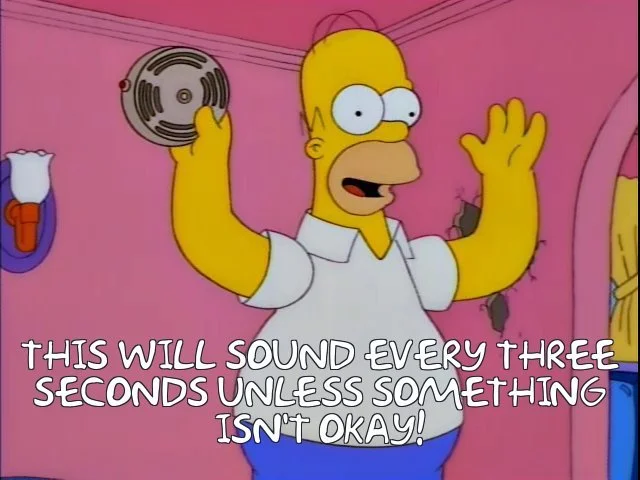
I liken this to a smoke detector that starts beeping when you’ve just burnt a piece of toast. There’s no fire or even visible smoke, but that smoke alarm is highly sensitive, and it lets you know something is going on. Our brains can work the same way - pain can show up even when there’s no ongoing damage, acting like an overprotective alarm rather than a warning sign of harm.
Why This Matters for Injury and Rehab
Instead of asking “is this damage?”, a better question is: “what can I handle right now?” In some cases, it is okay to be active and exercise even if we have pain. Other times, it’s appropriate to take a step back and allow things to settle. When we view pain as more about sensitivity than damage, it becomes easier to keep moving and loading an area without unnecessary fear.
We can then scale activity to match that level of sensitivity - working within a tolerable range, adjusting when needed, and using pain as a guide rather than a stop sign. If pain is acting like that sensitive smoke detector, the goal isn’t to shut it off completely, but to gradually build tolerance so it becomes less reactive. From there, the focus shifts to what actually drives recovery: strength, mobility, movement quality, and confidence.
Pain is real, but it’s not always reliable. The fact that pain can vary from person to person with similar injuries, and that pain can be influenced by many things should tell us that not all pain is damage. Rather, it might be more useful to view pain as more about sensitivity, as this allows us to move and use an injured area while still respecting what we are experiencing. Pain is part of the picture, but it’s not the whole picture, and it’s not always a reliable measure of damage.