The Best Plans Aren’t Perfect. They’re Adaptable.
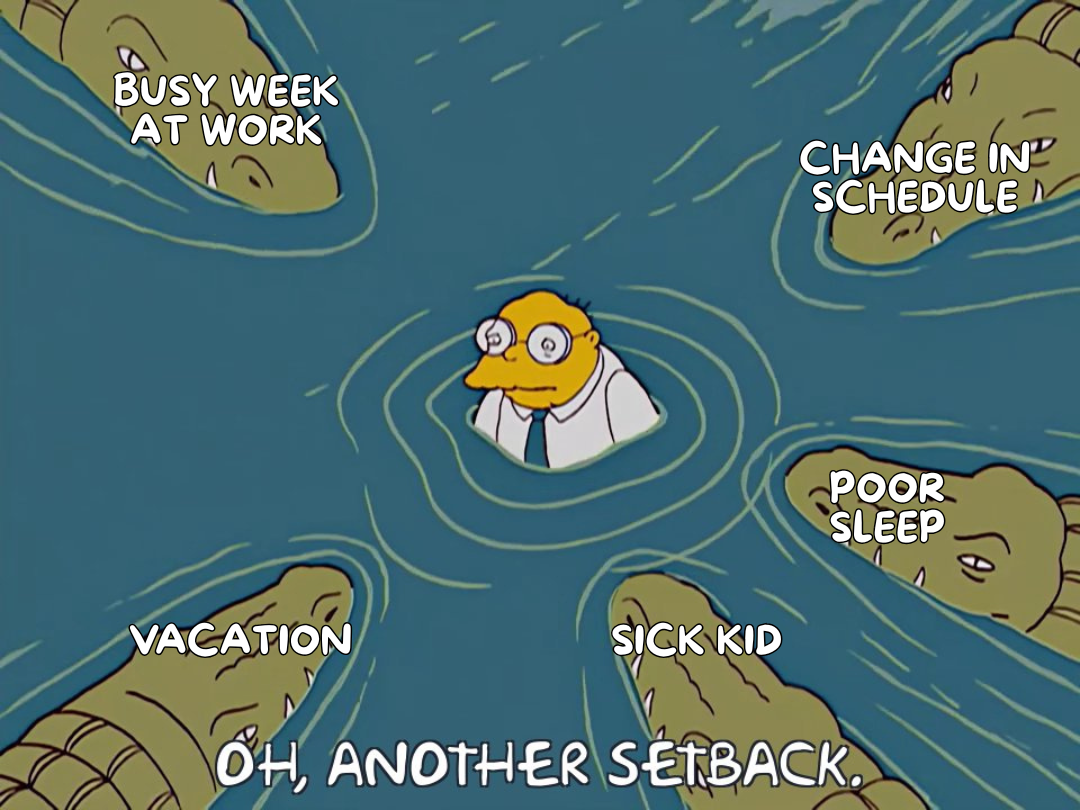
We’re always told that if you want to achieve something, the best thing you can do is make a plan. But as Mike Tyson said, everybody has a plan until you get punched in the face. You start feeling better, but then work gets busy, you get sick, you go on vacation; life happens. Suddenly you’re not following the plan exactly as intended, and it can feel like you’ve fallen behind or failed. But needing to adjust a plan doesn’t mean the plan failed. In many cases, the ability to adapt is what makes a plan successful in the first place.
I learned this lesson the hard way while training for a half marathon. Last year I was building my running volume, but I became inconsistent with both my running and strength training due to travel, illness, and a stressful period. Instead of adjusting my program, I tried to continue as if nothing had changed. The result was knee pain that stopped my training and set me back for months.
This year I faced a similar situation. My honeymoon meant two weeks without running. Even though I was still active through walking and swimming, I knew that wasn’t the same as running. Instead of trying to continue where I left off, I adjusted my plan and reduced my volume for four weeks to build back up before progressing further. It delays my half marathon timeline by a few weeks, but that’s a much better outcome than losing another seven months.
Here are some things to consider if you feel you’ve been inconsistent in your rehab due to life getting in the way:
Manage expectations - if you’ve missed time due to life events, it’s unrealistic to expect the exact same progress as if nothing had changed. Adjusting expectations isn’t being negative; it’s being realistic.
Something is better than nothing - rehab doesn’t have to be all or nothing. Even doing one exercise is often enough to maintain momentum until life settles down.
Plan out what you can - if you know a vacation, work trip, or busy period is coming up, adjust the plan before it happens instead of trying to pretend nothing has changed.
Accept what you can’t plan for - illness, stress, emergencies, and unexpected events happen. Success isn’t avoiding them - it’s knowing how to respond when they occur.
Rehab is full of ups and downs - even under ideal circumstances, recovery has ups and downs. Progress isn’t measured by perfect weeks. It’s measured by the overall trend.
This is not a setback; it’s an adjustment - taking a step back after a break isn’t failure. It’s often the smartest way to keep moving forward.
Life is going to happen. Vacations, illness, work stress, family commitments, and unexpected interruptions are part of being human. A good rehab plan isn’t one that only works when life is perfect. It’s one that can adapt when life isn’t. Missing time doesn’t mean you’ve failed. Sometimes the smartest thing you can do is take a small step back, adjust the plan, and keep moving forward. That’s not a setback; that’s good rehab.