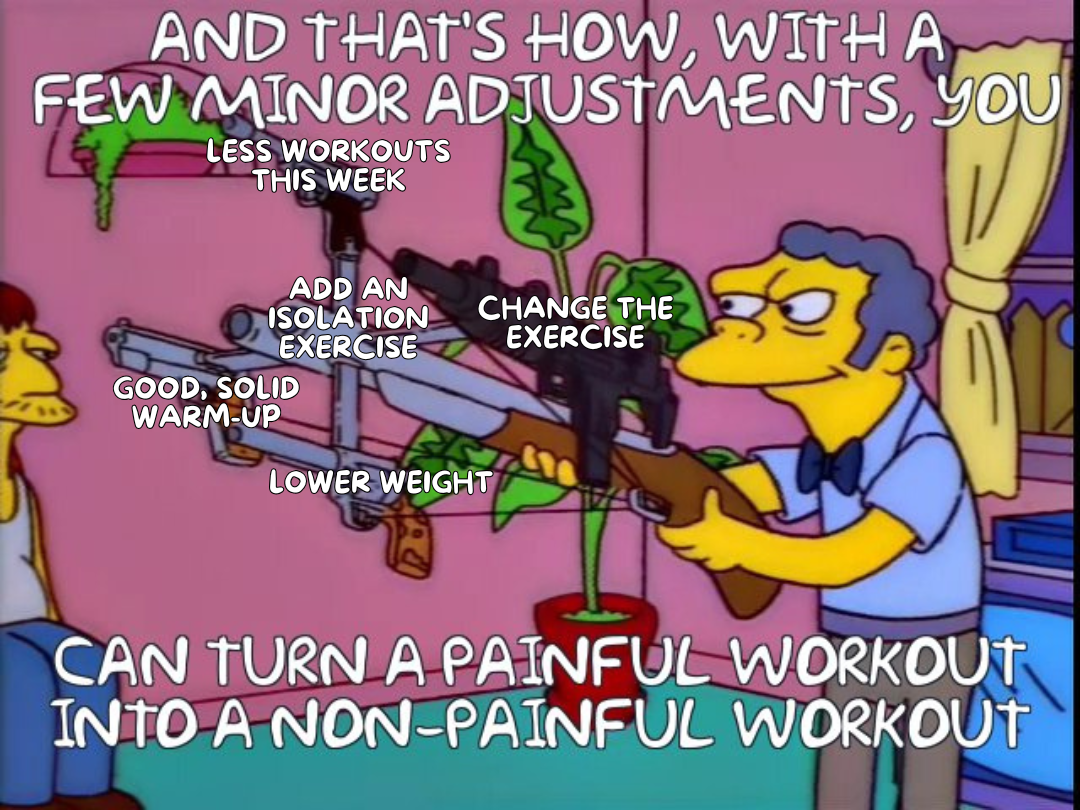
Ways to Reduce Pain Without Stopping an Activity
One of the most frustrating parts of dealing with an injury is when it takes us away from the things we enjoy- sports, training and daily movement. Sometimes the pain itself forces us to stop, but even when it’s manageable, many people still choose to stop. Hoping the pain goes away on its own, fear of making things worse, fear of more pain, uncertainty, or apprehension are all reasons we stop. This can be especially confusing when the pain only bothers during activity, and not with everyday life.
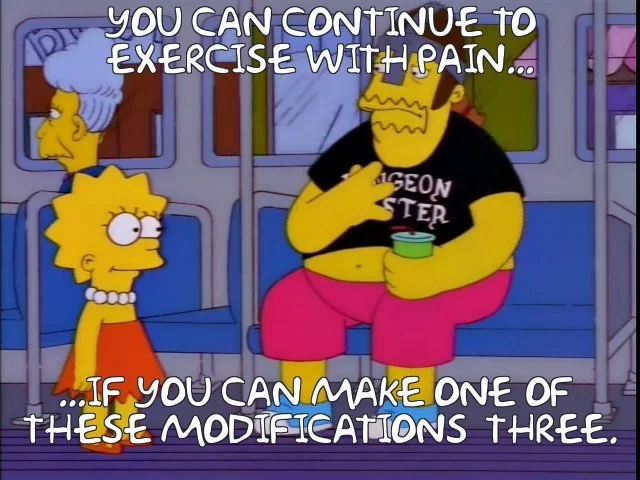
For the majority of injuries, maintaining some level of activity, even with some pain, is still okay, and in many cases encouraged. We still want to load the painful area so it can adapt, get stronger and become less sensitive. There are many ways to do this, but they mainly fall into three categories.
There are a couple of caveats to this though. Some injuries, such as high-risk bone stress fractures, do require rest. The pain also needs to be at a tolerable level. Pain over a self-reported 7/10 is usually a red light for me as it means the load is too much. It is always important to get a proper assessment so you know whether continuing is safe.
With that said, the three major ways to keep training while managing pain are: movement preparation, movement modification and load adjustment.
Movement Preparation
Sometimes a thorough warm-up or a few targeted exercises to the specific injured/painful area can make a big difference. Increased body temperature, increased blood flow, muscle activation/priming (even though muscles are technically always active unless there’s a nerve injury) and mental preparation all help modulate pain during your session.
Take a runner who feels calf tightness, especially at the start of a run. Exercises like calf stretching, calf raises, double leg hopping, skipping or bounding before the run can help. These exercises prepare the calf muscles for what’s coming and give you way more control over intensity and progression compared to jumping straight into the run.
Movement Modification
Small changes to how you perform an exercise can go a long way for some people when dealing with an injury. The goal here is to train the same muscle groups but in a way that you tolerate more. If someone has shoulder pain when doing lateral raises with their palms down, switching to a more thumbs-up position or bringing their arms forwards a bit can reduce sensitivity. Sometimes it is just specific movements that are irritated. Switching a squat to a leg press machine, or adjusting cadence (step frequency) when running can immediately make training more tolerable.
Load Adjustment
Often the issue isn’t the movement itself — it’s that the load exceeds what your body can currently handle, and usually the simplest step is to temporarily reduce the load. Yes, people dislike lowering weights, but it’s a straightforward and effective strategy. Reducing volume (sets × reps) or training frequency are other options. You’re still doing the activity — just at a level your body can manage right now. Think quality over quantity. For a runner who consistently notices pain getting worse around the 5 km mark, dropping to 4 km and building back up is a perfectly valid approach. Or changing from five runs per week to three, or removing the most stressful run from the schedule.
The key to any of these changes is trial and error. Everyone is different and everyone’s pain experience is different, which makes blanket recommendations tough. The good news is that we have lots of options available to us, which makes the chances of finding something that works very high. The other thing to remember is these changes are temporary. They are short term changes to help bring the pain down while still staying active. Once pain is more under control, then we start progressing back towards our previous levels.