When Pain Doesn’t Mean You Need to Change Everything
Whenever something starts hurting, our first instinct is usually to do something about it. We look for different strengthening, stretching, or self-massage exercises, try to figure out what’s going on, and modify activity or stop altogether until it settles. This is a completely understandable reaction, and something I’ve done for my numerous injuries. But over the past few months, I’ve been doing almost the opposite with my own ankle.
Whenever something starts hurting, our first instinct is usually to do something about it. We look for different strengthening, stretching, or self-massage exercises, try to figure out what’s going on, and modify activity or stop altogether until it settles. This is a completely understandable reaction, and something I’ve done for my numerous injuries. But over the past few months, I’ve been doing almost the opposite with my own ankle.
I started to develop some pain on the outside of my left ankle throughout the course of my first baseball game this year back in March. I noticed it every time I got into my defensive position, but I was still able to run. After the game, I would get this painful stretching feeling whenever I would point my toes down and inward. I was a bit worried about continuing my running because one of my teammates had what sounded like a similar issue and couldn’t run because of it. However, because I was still able to run in the game without pain, I figured I’d give it a try. I was pleasantly surprised when it didn’t get worse with running; I could feel it throughout the run, but I think it actually felt better by the end. Walking around and doing all of my other exercises had no impact; it was literally just getting into my ready position in baseball that aggravated.
I played around with some exercises at home to try and load it like I do with most injuries, but nothing was really working for me— I knew I was loading the muscles, but just not in the direct way I like to during injury rehab. In looking at my running program and baseball schedule, I thought, “what is this actually stopping me from doing?” There wasn’t really anything, so I decided the best plan was to just keep monitoring it rather than overhaul everything. Here’s why.
It wasn’t getting progressively worse. Despite playing double-headerd and some intense weekly training, my ankle wouldn’t feel any worse during play or after. Overall, day-to-day it wasn’t becoming more painful. Even climbing down the steep hills of Mount Zeus in Greece, which was painful at the time, did not make it worse afterwards.
There were only two movements that aggravated it. The pain only appeared in two situations: getting into my defensive ready position in baseball, and actively pointing my toes down and in while sitting or lying down. Everything else - including running, hitting, lifting, and walking - was pain-free.
It wasn’t affecting what I could do. Pain isn’t the only thing that matters - function does too. My ankle wasn’t limiting any of my athletic and daily activities.
It was still being loaded. Even though I couldn’t find a good exercise that I felt was directly targeting the painful area, I wasn’t avoiding loading it. I was still running, playing baseball, strength training, and walking daily. This meant my ankle was still experiencing regular loading.
No obvious red flags. Nothing stood out as something that needed immediate attention - no acute mechanism, swelling, redness, heat, numbness, night pain or inability to weight-bear.
Time is part of rehab whether we like it or not. Whether I exercised it specifically or not, healing still happens. A big part of recovery, even with good rehab, is the body’s natural healing process, which takes time. Tendons especially (which is what I think this is) are notorious for taking weeks or months to be pain-free, so I’ve had to manage expectations.
It’s important to emphasize that this should not be the default approach to every injury. This decision was based on how my symptoms behaved over time. If the pain had become more limiting, progressively worsened, or stopped improving, I would have changed course by reducing my activity and adding more targeted rehab. This wasn’t a case of me avoiding rehab, but rather matching my approach to how my symptoms were responding.
We often assume every painful body part needs a sophisticated rehab plan. Sometimes it does, but sometimes it simply needs appropriate loading, time, and careful monitoring. The key for me was not panicking or worrying about my ankle, continuing to use it as much as I could, and being prepared to modify if something changed. Good rehab isn’t about doing more. It’s about doing what’s necessary, and knowing when nothing more is needed.
Pain Relief is Not the Finish Line
When pain starts to settle, it’s normal to think that you’re ready to get back to physical activity and sports. Reducing pain is one of the first goals we focus on in early rehab given the unpleasantness of pain - it’s uncomfortable, limits movement, and can negatively affect how we view our injury. That’s why, when pain does start to improve, it feels like a big win. We can start to move more comfortably again, and we’re able to return to various activities. We can feel like we’re ready to jump back into sports, but this is usually a false sense of security. For many injuries, pain relief is the beginning of the next rehab phase, not the end of rehab.
When pain starts to settle, it’s normal to think that you’re ready to get back to physical activity and sports. Reducing pain is one of the first goals we focus on in early rehab given the unpleasantness of pain - it’s uncomfortable, limits movement, and can negatively affect how we view our injury. That’s why, when pain does start to improve, it feels like a big win. We can start to move more comfortably again, and we’re able to return to various activities. We can feel like we’re ready to jump back into sports, but this is usually a false sense of security. For many injuries, pain relief is the beginning of the next rehab phase, not the end of rehab.
Why Less Pain Doesn’t Always Mean You’re Ready
Unfortunately, pain doesn’t tell us the whole story. Pain reflects sensitivity, not just tissue damage, and can be influenced by many factors beyond the injury itself. A runner may have less knee pain but still lack the mileage needed to return to full training. A baseball pitcher may throw pain-free but still not have the velocity or volume needed for competition. In both cases, pain has improved, but there is still a gap between feeling better and being prepared.
The Gap Between Feeling Better and Performing Better
Pain relief and performance are not the same thing. While reducing pain is often the first goal, it’s not the only goal. A good rehab program should be built around increasing your ability to handle the demands of your sport or physical activity. This includes strength, mobility, endurance, conditioning, skill, and confidence. Many people will either rest their aches and pain until they feel better, or do some rehab until the pain goes away, and then jump straight back into their activity. But focusing on just pain can often lead to flare-ups, setbacks, and regressions in rehab because they mistake feeling better for being prepared to return to sport. Unfortunately, getting out of pain isn’t the same as getting back to sport.
What Rehab Should Focus on After Pain Settles
The goal after pain settles is to close the gap between where you are and what your sport requires. For a runner, that may mean gradually increasing mileage. For a pitcher, it may mean rebuilding throwing volume and intensity. For others, it could mean restoring strength, power, conditioning, or confidence. Whatever the activity, the principle is the same: progressively expose yourself to the demands you’ll eventually face.
Pain Relief is the Beginning, Not the End
A decrease in pain is worth celebrating, especially if the injury has been limiting for a long time. But pain relief itself isn’t the finish line. It’s often the point where the focus shifts from feeling better to becoming prepared. Because getting out of pain and getting back to sport are not always the same thing.
The Best Plans Aren’t Perfect. They’re Adaptable.
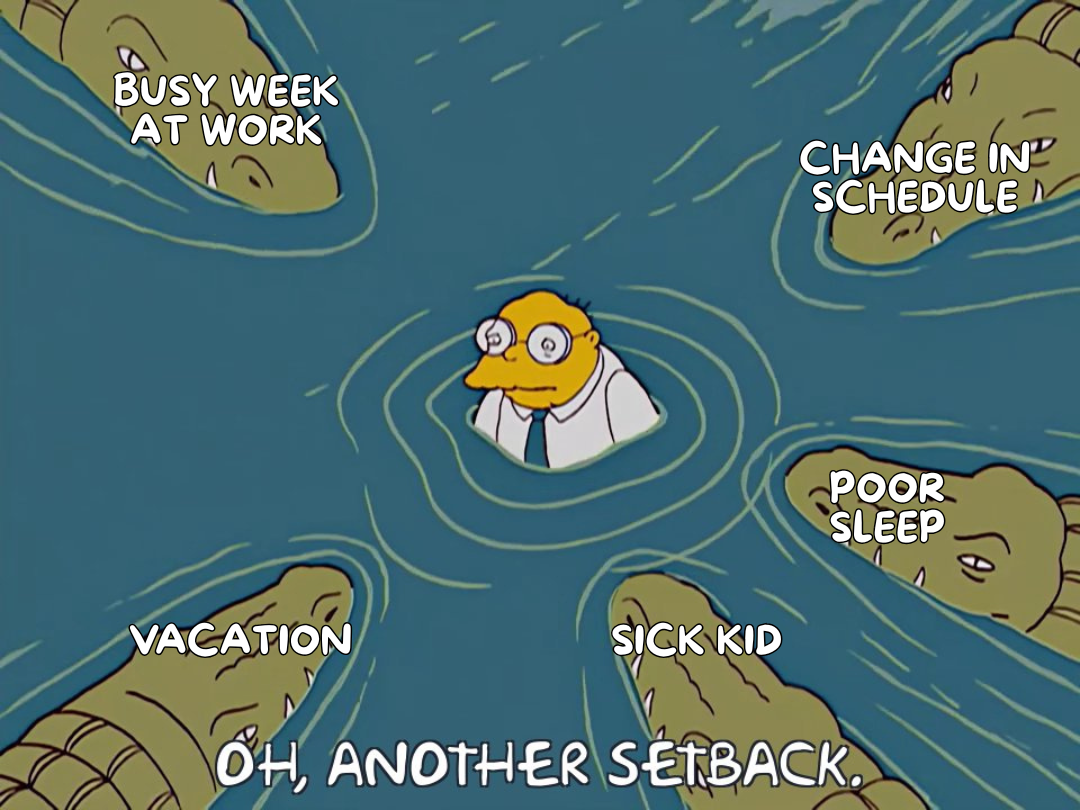
We’re always told that if you want to achieve something, the best thing you can do is make a plan. But as Mike Tyson said, everybody has a plan until you get punched in the face. You start feeling better, but then work gets busy, you get sick, you go on vacation; life happens. Suddenly you’re not following the plan exactly as intended, and it can feel like you’ve fallen behind or failed. But needing to adjust a plan doesn’t mean the plan failed. In many cases, the ability to adapt is what makes a plan successful in the first place.
We’re always told that if you want to achieve something, the best thing you can do is make a plan. But as Mike Tyson said, everybody has a plan until you get punched in the face. You start feeling better, but then work gets busy, you get sick, you go on vacation; life happens. Suddenly you’re not following the plan exactly as intended, and it can feel like you’ve fallen behind or failed. But needing to adjust a plan doesn’t mean the plan failed. In many cases, the ability to adapt is what makes a plan successful in the first place.
I learned this lesson the hard way while training for a half marathon. Last year I was building my running volume, but I became inconsistent with both my running and strength training due to travel, illness, and a stressful period. Instead of adjusting my program, I tried to continue as if nothing had changed. The result was knee pain that stopped my training and set me back for months.
This year I faced a similar situation. My honeymoon meant two weeks without running. Even though I was still active through walking and swimming, I knew that wasn’t the same as running. Instead of trying to continue where I left off, I adjusted my plan and reduced my volume for four weeks to build back up before progressing further. It delays my half marathon timeline by a few weeks, but that’s a much better outcome than losing another seven months.
Here are some things to consider if you feel you’ve been inconsistent in your rehab due to life getting in the way:
Manage expectations - if you’ve missed time due to life events, it’s unrealistic to expect the exact same progress as if nothing had changed. Adjusting expectations isn’t being negative; it’s being realistic.
Something is better than nothing - rehab doesn’t have to be all or nothing. Even doing one exercise is often enough to maintain momentum until life settles down.
Plan out what you can - if you know a vacation, work trip, or busy period is coming up, adjust the plan before it happens instead of trying to pretend nothing has changed.
Accept what you can’t plan for - illness, stress, emergencies, and unexpected events happen. Success isn’t avoiding them - it’s knowing how to respond when they occur.
Rehab is full of ups and downs - even under ideal circumstances, recovery has ups and downs. Progress isn’t measured by perfect weeks. It’s measured by the overall trend.
This is not a setback; it’s an adjustment - taking a step back after a break isn’t failure. It’s often the smartest way to keep moving forward.
Life is going to happen. Vacations, illness, work stress, family commitments, and unexpected interruptions are part of being human. A good rehab plan isn’t one that only works when life is perfect. It’s one that can adapt when life isn’t. Missing time doesn’t mean you’ve failed. Sometimes the smartest thing you can do is take a small step back, adjust the plan, and keep moving forward. That’s not a setback; that’s good rehab.
Build Calluses, Not Blisters
Load management and gradual progression can feel a little abstract sometimes. One analogy I often use with patients is the difference between building calluses and developing blisters.
Load management and gradual progression can feel a little abstract sometimes. One analogy I often use with patients is the difference between building calluses and developing blisters.
Blisters are pockets of fluid that form between layers of skin after sudden or excessive friction. Most people have experienced them from a new pair of shoes that rub until they’re broken in. They’re painful, limiting, and usually settle within a few days.
Calluses, on the other hand, develop gradually over time in response to repeated pressure and friction. They’re your body’s way of reinforcing an area to better tolerate stress.
The same thing can happen with training and activity. When we suddenly do too much, too soon, we often develop the equivalent of a blister. Our body isn’t prepared for the spike in stress, so pain flares up and we become limited for a few days. But when we progress gradually, we give the body time to adapt. Over time, we become stronger, more resilient, and more tolerant to the demands we place on ourselves. We build calluses instead of blisters.
It’s natural to want to progress quickly in sport and training. But most of the time, the better approach is to build calluses, not blisters. Avoid big spikes in activity, progress gradually, and give your body time to adapt. That’s usually what keeps people active, healthy, and moving forward long term.
Injury Prevention Doesn’t Mean Injury-Proof
Athletes, professional organizations, and everyday active people are always looking for ways to prevent injuries, and why not? Injuries hurt, interrupt training, and take you away from the sports and activities you enjoy. For teams and organizations, injuries can also mean reduced performance and financial loss. Because of this, there’s constant attention on injury prevention strategies, from training methods to recovery tools. But can injuries truly be prevented? Yes, but no. Unfortunately, you can do everything right and still get injured.
Why Injury Prevention Matters
Athletes, professional organizations, and everyday active people are always looking for ways to prevent injuries, and why not? Injuries hurt, interrupt training, and take you away from the sports and activities you enjoy. For teams and organizations, injuries can also mean reduced performance and financial loss. Because of this, there’s constant attention on injury prevention strategies, from training methods to recovery tools. But can injuries truly be prevented? Yes, but no. Unfortunately, you can do everything right and still get injured.
How Injury Prevention Programs Work
At the larger population level, the FIFA 11+ is a clear example of how we can prevent injuries. Across multiple studies and systematic reviews, this program of warm-up exercises and drills has been shown to lower injury rates, particularly for the lower extremity and severe injuries in soccer players. The biggest benefits are seen when teams consistently perform the program, reinforcing that injury prevention is less about finding the perfect exercise or tool, and more about regularly exposing athletes to strength, balance, coordination, and sport-specific movement demands over time.
Organizations can prevent injuries through rule changes and mandating protective equipment. Major League Baseball implemented two significant rule changes to prevent collisions at second base and home plate through the Chase Utley Rule and Buster Posey Rule, respectively. Unsurprisingly, facial injuries increase in hockey when players are no longer required to wear full face cages.
How Athletes Reduce Injury Risk
Individuals can also take steps to prevent injuries themselves. The entire premise behind load management is to gradually expose and progress an activity in order to drive positive adaptations and prevent overuse injuries. Exercise and resistance training should, in theory, increase our overall fitness, strength and tolerance for load so that we have increased capacity for the stress of physical activity and sports.
Why You Can Still Get Injured Doing Everything Right
Ultimately, though, we’re never going to be able to prevent all injuries. Injuries are multifactorial, and even if you’re doing everything right, random stuff can still happen. You can roll your ankle in a divot while running, fall funny on your shoulder in a rugby tackle, or accidentally collide with a teammate on the hurling pitch. In a more indirect way, stresses with work and/or family may compound with your activity stress and make you more prone to an overload injury, or you might overstretch your progression and end up with an aching knee. These are all things that can result in an acute or chronic injury that are either out of our control or inadvertent. Even in the studies looking at the FIFA 11+, there were still injuries that occurred to those who completed the program.
Is Injury “Prevention” the Right Word?
Part of this discussion may come down to semantics. “Prevent" implies stopping something from happening entirely, which is why many people in sports medicine prefer terms like injury mitigation or risk reduction instead. But even those terms have limitations because injuries are unpredictable and multifactorial. Still, if an intervention group in a study experiences 0.7 injuries per 1000 training hours compared to 1.3 in the control group, it’s reasonable to say injuries were reduced or prevented at the population level, even if we can’t predict who specifically would have been injured.
Injuries certainly can be prevented, but you can do everything right and still get injured. This is because injuries are multifactorial, and we often don’t know exactly which factors contributed to them. It certainly makes sense to take reasonable measures to prevent injuries, but injuries from sports and physical activity are a reality and not something we are going to be able to eliminate completely. The best we can do is physically prepare for the demands of the activity, progress appropriately, recover well outside of sport, and stay as healthy as possible.
How to Build a Better Arm Care Program
There are many exercise programs out there billed as arm care programs. Most of these rely heavily on bands or light dumbbell exercises, like the Thrower’s 10. These programs can be great for the early stages of rehab after an injury or surgery, but if you really want to strengthen your throwing arm, arm care needs to involve more than just bands and external rotations. Here are some things I think you should consider as part of your arm care routine.
There are many exercise programs out there billed as arm care programs. Most of these rely heavily on bands or light dumbbell exercises, like the Thrower’s 10. These programs can be great for the early stages of rehab after an injury or surgery, but if you really want to strengthen your throwing arm, arm care needs to involve more than just bands and external rotations. Here are some things I think you should consider as part of your arm care routine.
Full Body Strength Matters for Throwing
Throwing and pitching are full body movements. Power starts with the legs and is transferred through the core, shoulder girdle, and ends at the wrist. Think of cracking a whip: the momentum starts at the handle, but the snap comes at the very end- that’s ball release. If you’re already doing some shoulder exercises but not incorporating your core and trunk, you’re missing out on some major development.
Compound Exercises Build a Stronger Throwing Arm
We typically think of arm care as isolation exercises for the rotator cuff, but any exercise involving movement of the shoulder is going to get the rotator cuff firing. Compound, multi-joint exercises allow you to train multiple muscles at once and allow for heavier loading. Think various types of rows, chest pressing, overhead pressing, and pull-ups. These exercises can help you build a lot of strength.
Rotator Cuff Training for Baseball Players
When most people think of rotator cuff training, they think of bands and light dumbbells. But the rotator cuff muscles are still muscles, and they can usually tolerate more load than people think. I also like training them in positions that better reflect throwing - around shoulder height and with a straighter arm to mimic ball release. Lateral raises and various T’s are some of my favourites, but I also like face-pulls for external rotation.
Train the Speed and Forces of Throwing
No exercise can fully recreate and prepare you for the forces generated during throwing, except for throwing itself. But power-based movements and eccentrics can still prepare the arm well because they emphasize speed and high force generation. Medicine balls are a favourite tool of mine, but you can also do traditional resistance exercises with lighter weight and higher speed. For eccentric exercises, you’re focusing on a slow, controlled lowering of the weight- these can create high levels of tension and are especially useful for building strength and force tolerance, but can also be very fatiguing.
Don’t Ignore the Biceps, Triceps and Forearm
The rotator cuff gets all of the attention, but don’t forget the other muscles. The biceps and triceps both attach into the shoulder socket, and therefore play a role in throwing. The biceps are especially important, as it acts as a 5th rotator cuff muscle providing extra stability, but also controls the elbow as we extend to ball release. The forearm muscles, especially the flexor muscles, are garnering more attention recently as a way to help mitigate elbow injuries like UCL tears.
Shoulder Mobility Still Matters
Throwing requires you to have excellent shoulder mobility, and this can decrease following a throwing session. Working on overhead mobility and external rotation through the pectoral and latissimus muscles can help restore range of motion loss over the course of a game and season.
Progressive Throwing is Part of Arm Care
We typically think of arm care as shoulder strengthening exercises, but we would be remiss if we didn’t consider the overall load and stress on the arm, with throwing being one of the biggest contributors. Here we want to make sure we avoid spikes in throwing volume and intensity by programming a progressive increase, and then allowing enough time between sessions.
Recovery is Part of Arm Care Too
It can feel like you always need to be doing something, but doing nothing can be just as important (link to blog). A workout is only as good as your ability to recover from it. Make sure you’re getting enough sleep, nutrition, hydration and relaxation (link to other blog) to support all of the work you’re putting in. A fatigued, overworked muscle is more prone to injury.
When Strength Testing Can Help
If you’re playing at a higher level and looking to up your game, or are currently dealing with an injury or pain with throwing, it would be valuable to get your shoulder strength tested to see if there are any deficits. In my experience, baseball players are often lacking strength in external rotation (relative to body weight and internal rotation), scaption (lateral raise) and grip. Testing can help identify where an athlete may need more attention instead of just guessing.
How to Build an Arm Care Routine
This may seem like a lot to consider, but arm care doesn’t need to be its own separate workout. It can be spread throughout your week depending on your schedule and training goals. Power exercises can be added early in sessions, compound lifts already train many important muscle groups, and a few targeted shoulder and forearm exercises can fill in the gaps. For example, grip strength can be added by trying to squeeze barbells or dumbbells as hard as you can or by emphasizing finger grip during certain exercises. The goal isn’t to cram everything into one day - it’s to consistently expose your arm to the demands of throwing over time.
This also isn’t to say I don’t like resistance bands or light weights. These tools can have their place, especially as part of your warm-up, or if you’re looking to get some time under tension with slow, controlled exercises as part of a lighter training day. The problem is when these tools ARE your arm care, and not just one part of it.
Final Thoughts on Arm Care for Baseball Players
Don’t think of arm care as just exercises for your shoulder; think of it as trying to build the strongest, most resilient arm you can. This includes full body strength, compound upper body exercises, shoulder and arm exercises specific to throwers, adequate mobility, progressive throwing and proper recovery. As much as I listed some go-to favourite exercises of mine, there really is no single right way- find exercises that target what you need and fit the demands of throwing. Stick to a routine, perform it consistently, and you should see your arm health improve. Arm care doesn’t need to be complicated.
Consistency is What Makes Running (and Rehab) Feel Easier
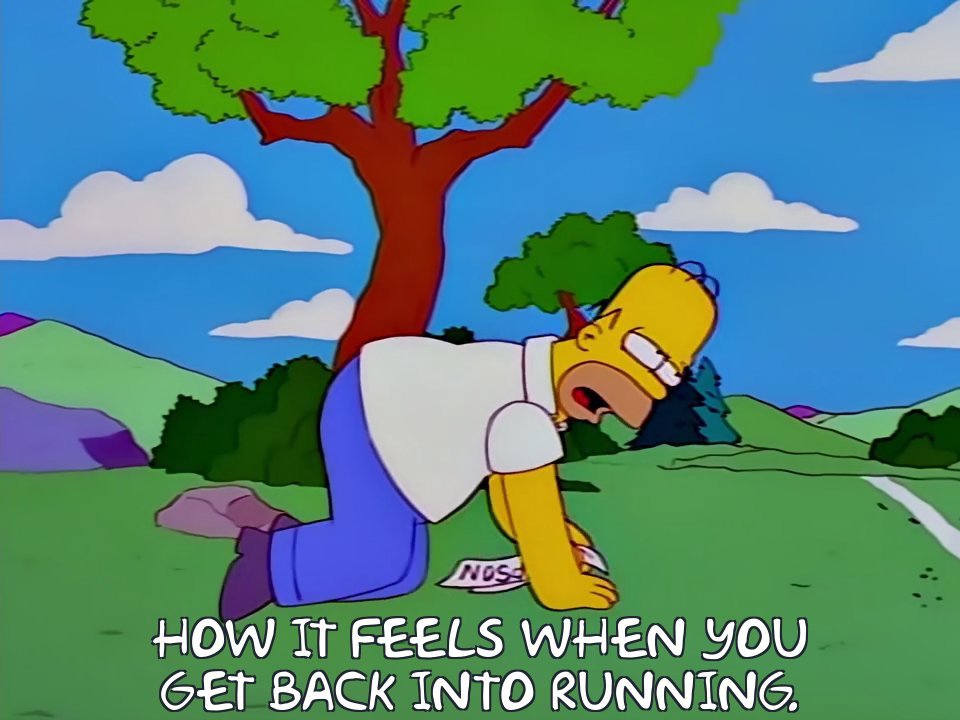
2025 was the year I decided to get back into running seriously. I had run cross country all through my younger and teenage years, but stopped due to university. There were a couple of times when I tried to get back into running, but it never felt great. Reflecting back, I realized I had been approaching my return to running all wrong. I learned that I needed to be consistent if I wanted to feel better running. Once I applied that, everything about running started to feel easier.
2025 was the year I decided to get back into running seriously. I had run cross country all through my younger and teenage years, but stopped due to university. There were a couple of times when I tried to get back into running, but it never felt great. Reflecting back, I realized I had been approaching my return to running all wrong. I learned that I needed to be consistent if I wanted to feel better running. Once I applied that, everything about running started to feel easier.
Why Consistency Matters for Running and Rehab
Things usually don’t feel great whenever we try to start a new activity or restart something we once did years ago. That doesn’t mean something is wrong. It often just means you haven’t been consistent long enough for your body to adapt. That applies whether you’re getting back into running, dealing with an injury, or trying anything new. As an athletic therapist for almost nine years now, that was something I learned from working with my patients and taking courses that I now needed to apply to myself.
Whenever I had attempted running again, I was always trying to do a distance that was too long. The issue wasn’t running itself, but that I was starting at too high of an entry point. One time I even tried to start again on what ended up being the hottest day of the year, and subsequently developed mild shin splints. Instead of adjusting the distance and focusing on consistency, I would just chalk it up to being older and out of shape and moving on.
What Changed: A More Consistent Approach
With this in mind, my approach in 2025 was different. I knew I had to start smaller, and I had to stick with it. I started with something I had never tried before: run-walks. By running for 5 minutes, walking for 5 minutes and running again for another 5 minutes, this would be a way to get some mileage without overdoing it. I stuck with this for every other day for two weeks before trying for 10 minutes straight. Nothing fancy; just consistent, manageable progress. After that, I would add two and a half minutes every 3-4 runs depending on how I felt. I went by time until I found an app to track distance that I liked; I switched to adding half a kilometre every 3-4 runs.
After a few months of consistent, gradual running, my body was starting to feel good again; not like when I was 17 or 18 and in my prime, but I was never expecting that. Even when I developed some shin pain, I still maintained some running consistency - I had to scale down my volume a bit, but only to the point where I was comfortable with the pain and not aggravating it. I calmed it down, stayed consistent, and then built it back up.
When I did get inconsistent with my running, that’s when problems developed again. I experienced some knee pain over the winter; while travel, sickness and stress certainly played a major role, I was also inconsistent with my running and strength training, and didn’t adjust my running volume to account for this. This resulted in me starting right back to square one with run-walks, but it was just another lesson learned. I’ve been locked in since and have been feeling great.
Consistency is what creates the outcome.
Getting back into baseball this year, my first few training sessions felt weird at first and my shoulder would be sore immediately after. But after a few weeks of throwing, my arm was feeling strong and smooth again. We see this in rehab too. After an injury, exercises can feel awkward or even painful. But when they’re done consistently and progressed appropriately, the body adapts.
The biggest difference in my running this time around was my mindset. I decided I would not wait for things to feel right before I committed. Rather, I decided to be consistent in order to feel right. It involved a step back further than I thought I needed, but it ended up being the right entry point for me to say, “I can keep doing this.” I had always told patients that, despite my younger days of running, I never could see myself running a marathon. But that was based on how I had always approached running. I remember running along the coast of Bantry Bay thinking, a marathon seems possible now.
Most things don’t feel easy at the start - running, rehab, or getting back into any activity. It’s not because something is wrong; it’s because you haven’t been consistent with it yet. Consistency is what makes things feel easier.
Throwing With Arm Pain: Should You Stop or Keep Throwing?
Now that baseball and softball games have started all across Ireland, it’s not uncommon for arm pain to show up with the sudden increase in throwing. The big question is: “Should I keep throwing?” The answer isn’t as simple as stopping completely or pushing through. Rest can lower your tolerance and set you back when you return, while pushing through can make things worse. Like most things, the answer lies somewhere in the middle, and there are a few key things to consider to help you make the right decision.
Now that baseball and softball games have started all across Ireland, it’s not uncommon for arm pain to show up with the sudden increase in throwing. The big question is: “Should I keep throwing?” The answer isn’t as simple as stopping completely or pushing through. Rest can lower your tolerance and set you back when you return, while pushing through can make things worse. Like most things, the answer lies somewhere in the middle, and there are a few key things to consider to help you make the right decision.
Should You Keep Throwing With Arm Pain? A Simple Checklist.
Instead of guessing, here are some simple questions to help you decide whether to keep throwing or pull back. Think of this less like a yes/no decision, and more like a checklist.
How Did It Start?
A sudden, sharp onset of pain during one throw is more concerning. A gradual build-up with no clear moment usually points toward a load or sensitivity issue.
Where Is It?
If you can point to one specific spot, that is something to pay attention to. More general soreness or tightness is more likely load- or volume-related.
What Happens When You Throw?
Monitor how your arm feels as you throw. Pain that gets worse as you continue to throw is a concern. Pain that stays the same or improves as you warm up tells a different story.
What Happens After You Throw?
How you feel after throwing is just as important as when you’re throwing. If pain lingers or worsens into the next day, take note. If it settles quickly, you’re likely in a better spot.
What’s The Trend Over Days?
Think in patterns, not moments. If the pain is getting worse each session (more severe and/or comes on quicker), that’s a red flag. Stable or improving pain is more manageable.
Does Your Performance Change?
A drop in velocity or accuracy is more concerning than no change at all.
Does It Change How You Throw?
Are you altering your mechanics to avoid pain? Even if tolerable, compensations can shift stress elsewhere and make things worse.
Does It Affect You Outside of Throwing?
If pain carries into daily activities like reaching overhead or carrying, that’s worth paying attention to.
How Confident Do You Feel Throwing?
Do you trust your arm, or are you hesitant with every throw? We sometimes need a bit of encouragement to push through mental barriers, but we’re also pretty good at sensing when something isn’t right. Avoiding certain throws or holding back effort is something to flag.
None of these on their own are an automatic stop sign. But when multiple red flags show up, it’s time to pull back—or pause—and get assessed by someone who understands throwing injuries. If most of these are green flags, it’s usually safe to keep throwing. But that doesn’t mean ignore it—it means adjust. Reduce volume or intensity, monitor your response, and build back up with a plan.
One bad throw doesn’t mean you need to stop, but one pain-free session doesn’t mean you’re in the clear either. You don’t have to choose between shutting it down completely or pushing through pain. The goal is to make better decisions based on how your arm responds over time. If you’re unsure, that’s where a proper assessment matters—not just to tell you what’s wrong, but to give you a clear plan for what to do next. That’s exactly what we do at Bend Without Breaking Athletic Therapy.
You’re Focusing on the Wrong Things for Recovery
When people think about recovery from training or rehab, they usually think about what they need to add. Some of the common things I see are stretching, foam rolling or other myofascial release tools, massage guns, saunas, ice baths, or even recovery sessions consisting of low-intensity exercises. The goal always seems to be flushing things out or speeding up healing. But if your recovery routine is built around tools, you’re probably missing the point. You don’t need more recovery tools - you need better habits.
When people think about recovery from training or rehab, they usually think about what they need to add. Some of the common things I see are stretching, foam rolling or other myofascial release tools, massage guns, saunas, ice baths, or even recovery sessions consisting of low-intensity exercises. The goal always seems to be flushing things out or speeding up healing. But if your recovery routine is built around tools, you’re probably missing the point. You don’t need more recovery tools - you need better habits.
What Recovery Actually Is
Recovery is what allows you to adapt to training. After a session, your body needs time to repair and adjust to the stress you’ve placed on it. When that process goes well, you come back stronger. When it doesn’t, performance drops, fatigue builds, and injury risk increases. Your ability to adapt comes down to the balance between the load you place on your body and your ability to tolerate it. Recovery is not what you do after training - it’s your body’s ability to handle and adapt to stress.
What Actually Drives Muscle Recovery and Performance
This is where things often get off track. Recovery tools get the most attention because they’re visible, easy to use, and feel productive. But the biggest drivers are far less exciting:
Adequate sleep. This is where your body does most of its repair work. Poor sleep directly impacts performance and recovery.
Adequate nutrition. You need enough total calories to match your physical activity, and in the right balance: protein for muscle repair and growth, carbs for fuel, and fats to support cellular processes.
Adequate hydration. Often overlooked, but even just small levels of dehydration can negatively affect performance.
Stress management. Chronic stress can interfere with recovery and adaptation across the board.
These aren’t optional. They’re the foundation.
What About Recovery Sessions?
Many people also include “recovery sessions” - low-intensity workouts meant to help the body recover. But this is often misunderstood. If your goal is recovery, adding more load, even low intensity, is still adding load. A 5km “easy run” is still 5km of running volume. These sessions can be worked into your overall training and load management, but they are not a substitute for recovery.
Where Recovery Tools Fit In
This isn’t to say that recovery tools are useless. Foam rolling, massage guns ice baths - if you enjoy them and they help you feel better, they can be part of your routine. But they are accessories. They support recovery; they don’t drive it. No amount of foam rolling or ice baths will make up for poor sleep or under-fuelling.
What Good Recovery Actually Looks Like
Recovery is simple, but it’s not always easy. It looks like:
Eating enough at the right proportions to support your training
Staying hydrated throughout the day
Getting consistent, quality sleep
Giving yourself time between hard sessions
Doing things that help you relax and unwind
It doesn’t need to be complicated. There’s nothing wrong with lying in bed, watching something you enjoy, and calling that recovery.
Recovery isn’t tools - it’s habits. The basics aren’t exciting, but they’re what actually work. When tools start replacing sleep, nutrition, hydration, and stress management, that’s when recovery - and performance - start to suffer. Recovery isn’t what you do after training. It’s what allows your training to work.
Pain Does Not Always Mean Damage, and Why That Matters for Injury and Recovery
Whenever we feel pain, we usually assume we have caused some sort of tissue damage. But this isn’t always the case. Pain is not a direct measure of injury, and it’s often a poor indicator of how much damage is actually present. A more useful way to understand pain is to think of it as a reflection of tissue sensitivity rather than damage. This shift in perspective can have a major impact on how you approach recovery and whether you stay stuck or start making progress.
Whenever we feel pain, we usually assume we have caused some sort of tissue damage. But this isn’t always the case. Pain is not a direct measure of injury, and it’s often a poor indicator of how much damage is actually present. A more useful way to understand pain is to think of it as a reflection of tissue sensitivity rather than damage. This shift in perspective can have a major impact on how you approach recovery and whether you stay stuck or start making progress.
What is Pain, Really?
Pain can be hard to define, but at its core, pain is an unpleasant sensory and emotional experience associated with actual or potential tissue damage. This definition is important because it highlights that pain is real, but it’s also influenced by more than just what’s happening in our tissues.
Pain Does Not Always Reflect Tissue Damage
Paper cuts are a great example of how a very minor cut to the skin can be quite painful at the moment. On the other hand, the occurrence and progression of rotator cuff muscle tears increase with age, yet around 50% of people are asymptomatic. These two examples highlight just how varied our experience of pain can be. If pain always meant damage, then paper cuts wouldn’t hurt as much as they do, all shoulders would become progressively more painful as we age, and serious injuries would always be extremely painful. This is exactly why pain isn’t a reliable measure of damage.
We have this varied experience because pain is influenced by many factors. While we have sensory receptors that pick up painful sensations, pain itself is the brain’s interpretation and output of this information. Factors like stress, sleep, previous pain experiences, and even how you think about your injury can all turn the volume of pain up or down. When pain changes day to day, it doesn’t mean tissues are repeatedly being damaged and healed - it often reflects changes in sensitivity.
Pain is Influenced by More Than Just Tissue Damage
This matters because how we interpret pain influences how we respond to it. Many people become fearful of moving a painful area because they assume they’re causing more damage. While understandable, this avoidance can lead to under-loading and delayed recovery. On the other end, completely ignoring pain can lead to overload and further injury. Viewing pain as sensitivity, not just damage, allows you to move and load an area with more confidence while still respecting your limits.
When Pain is Helpful, and When It Isn’t
While unpleasant, pain can be helpful in certain circumstances. Following an acute injury, like rolling your ankle, it is the sensation of pain that tells us to stop the activity to avoid further injury and let it heal. We can use pain as a guide to know if activity is too much for us right now. However, pain can persist beyond normal healing timelines. The longer pain sticks around, the more sensitive the system can become, and the less reliable pain can be.
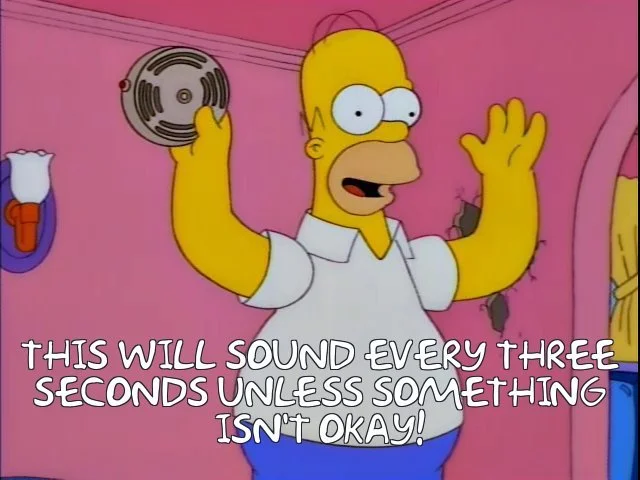
I liken this to a smoke detector that starts beeping when you’ve just burnt a piece of toast. There’s no fire or even visible smoke, but that smoke alarm is highly sensitive, and it lets you know something is going on. Our brains can work the same way - pain can show up even when there’s no ongoing damage, acting like an overprotective alarm rather than a warning sign of harm.
Why This Matters for Injury and Rehab
Instead of asking “is this damage?”, a better question is: “what can I handle right now?” In some cases, it is okay to be active and exercise even if we have pain. Other times, it’s appropriate to take a step back and allow things to settle. When we view pain as more about sensitivity than damage, it becomes easier to keep moving and loading an area without unnecessary fear.
We can then scale activity to match that level of sensitivity - working within a tolerable range, adjusting when needed, and using pain as a guide rather than a stop sign. If pain is acting like that sensitive smoke detector, the goal isn’t to shut it off completely, but to gradually build tolerance so it becomes less reactive. From there, the focus shifts to what actually drives recovery: strength, mobility, movement quality, and confidence.
Pain is real, but it’s not always reliable. The fact that pain can vary from person to person with similar injuries, and that pain can be influenced by many things should tell us that not all pain is damage. Rather, it might be more useful to view pain as more about sensitivity, as this allows us to move and use an injured area while still respecting what we are experiencing. Pain is part of the picture, but it’s not the whole picture, and it’s not always a reliable measure of damage.